
Can people with diabetes eat honey?
I am often asked this question. Is honey less harmful to diabetics than table sugar?
As beekeepers, we are not qualified to give medical advice. Of course, doctors can. Recently, I came across an article on this topic in a well-known German beekeeping journal, written by Professor Dr. K. Munstedt and diabetologist Dr. D. Winter.
Diabetes mellitus, or diabetes, is a very common condition. All statistics indicate an upward trend that will continue in the coming years.
The real problem with diabetes lies in the complications caused by poor blood sugar control. These complications usually only become noticeable after a few years. Often, type 2 diabetes is only discovered through these complications. The goal of any treatment is proper control and adjustment of blood sugar levels. Average blood sugar levels should be similar to those of a healthy person.
Extensive studies have shown that good diabetes control can significantly reduce, or even completely eliminate, the risk of diabetes-related complications later in life, thus offering these patients a normal and high-quality life expectancy. Eating and drinking are essential basic needs that greatly influence our quality of life. However, the restrictions imposed by diets lead to frustration and dissatisfaction, so diabetic patients are easily tempted to ignore prescriptions from time to time... or more often than they should. Because the "punishment" is not immediate – unlike what happens, for example, with excessive alcohol consumption – the consequences of persistently high blood sugar are underestimated by many diabetics.
An alternative to sugar?
A survey shows that many diabetics struggle to avoid sweets. Regarding the use of honey by diabetics, there are considerable differences of opinion both among the general population and in the medical community.
Since honey is primarily composed of simple sugars, glucose and fructose (approximately 75g per 100g of honey), diabetologists assume that honey behaves like a private sugar solution which, due to its rapid absorption into the bloodstream, causes high and therefore harmful blood sugar spikes in a very short time, to which a diabetic body cannot respond.
This is why diabetologists advocate instead for carbohydrates composed of complex sugars, organized into long chains of molecules. Because these long-chain carbohydrates must first be broken down into simple sugars before the body can absorb them, it is assumed that they result in a flatter blood sugar curve and are therefore better suited to diabetics. The extent to which this hypothesis holds true is still the subject of ongoing research.
The latest data supports the benefits of honey.
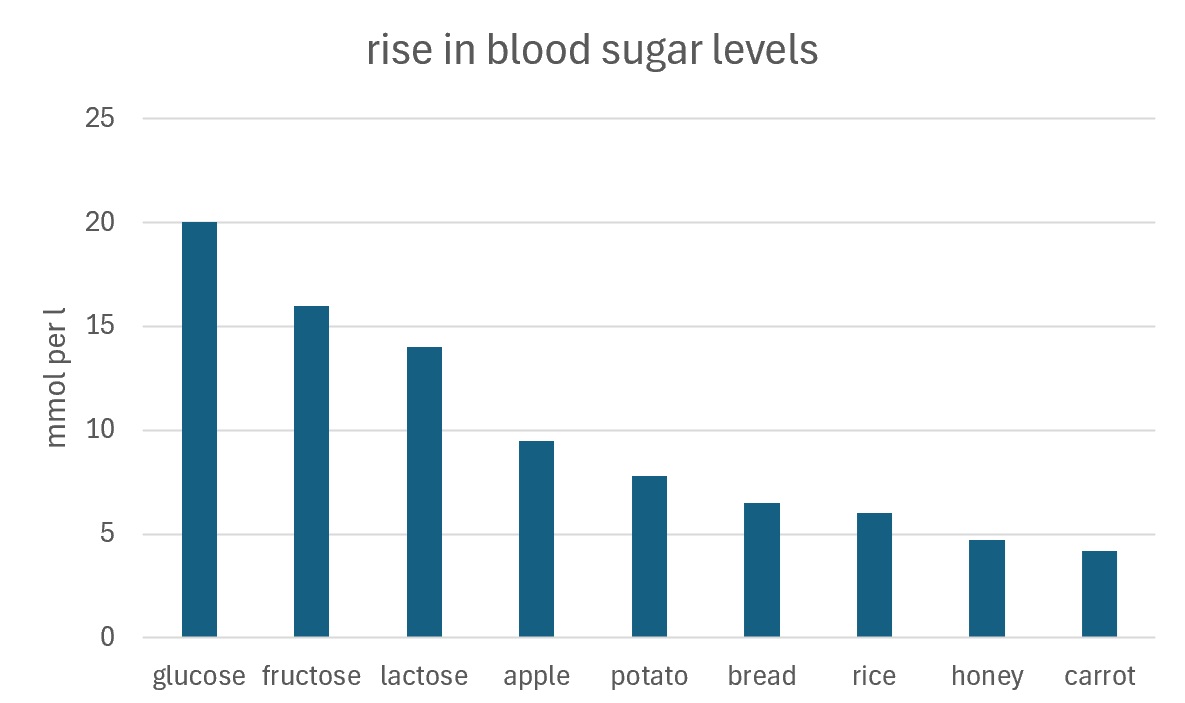
One study examined changes in blood glucose levels after the ingestion of 25 g of carbohydrates in different forms. The results demonstrate that after consuming honey, blood glucose levels rise less sharply than after consuming apples, bread, or rice. Only carrots cause a slight increase in blood glucose.
Influence on Cholesterol
Other studies conducted in recent years also confirm the positive influence of honey.
Immediately after ingestion, honey causes a significantly smaller increase in blood glucose than glucose, as well as a smaller increase in plasma insulin levels, meaning that the pancreas is less stressed by honey.
It was found that patients with high cholesterol levels achieved an 8% reduction in their LDL cholesterol (the "bad" cholesterol) levels after a 16-day course of honey.
Medical Disclaimer
The information is provided for general information purposes only and is not a substitute for professional medical advice, diagnosis, or personalized treatment.
Always consult a physician or healthcare professional with any questions regarding a medical condition.