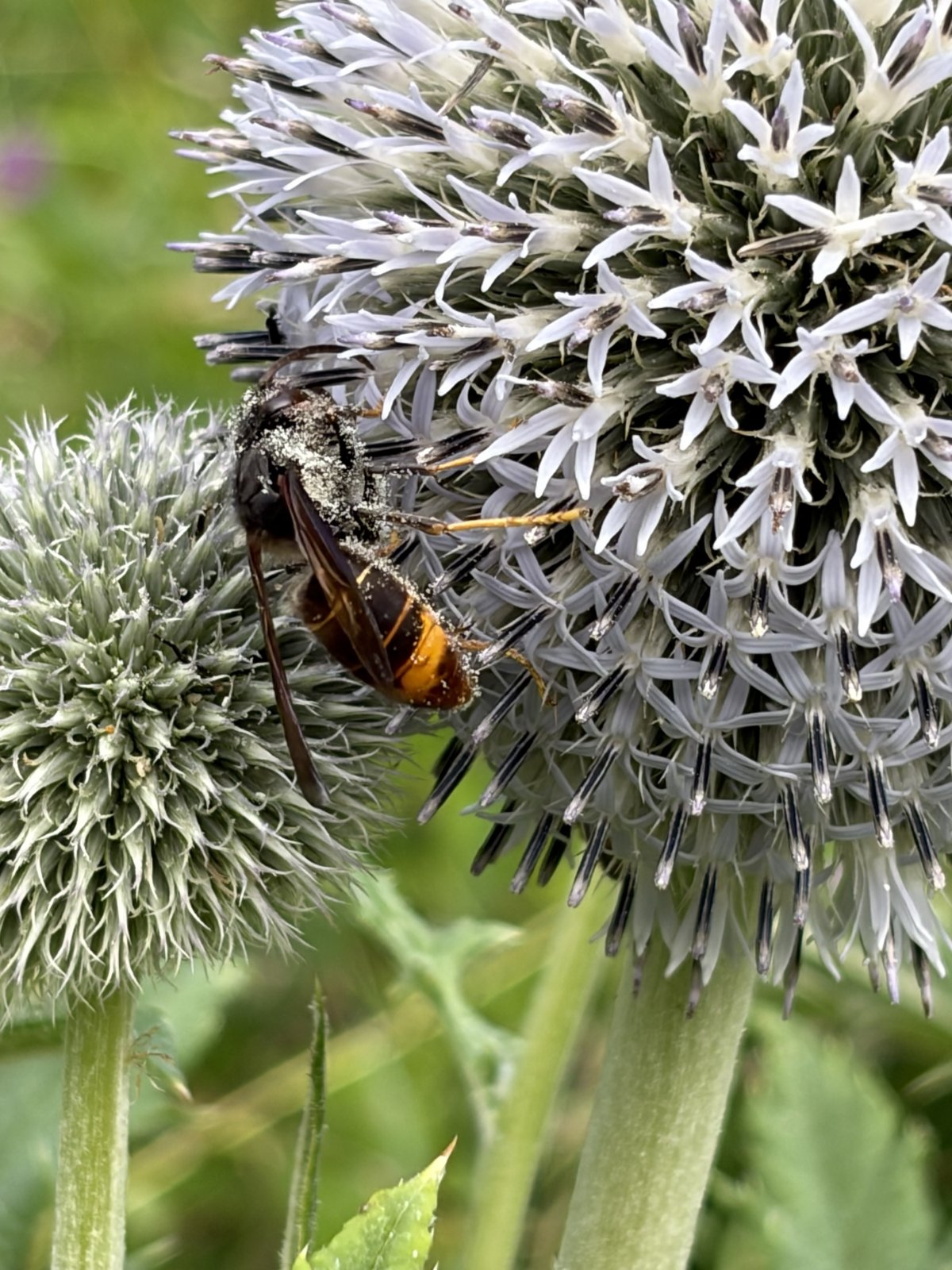
Asian Hornets have become a real threat for our bees.
First of all, I like to say that we as humans are in the first place responsible for this problem : due to globalization of trade, exotic plants, insects and animals have come our way. Secondly, if there would be enough bio-diversity in our environment, enough food, asian hornets would be less of a problem for bees. Hornets also collect food from flowers, plants and trees; just like bees do.
Unfortunately much of the natural resources have disappeared, to make place for houses, industries, roads etc. Agriculture is mostly done on large industrial scale, using pesticides, fertilizers and so on, creating fields of crop with zero value to insects, and as such creating huge surfaces of desert. Next to this, most people want to have gardens that look like perfectly trimmed and controlled areas. To do so the easy way, mowing robots are applied, they remove all flowers, again creating surfaces of low value for insects.
We can only solve the problems we have with the Asian hornets, if we buy more local biologically grown fruits and vegetables, and we leave in our gardens plenty of wild spots with flowers, plants and trees. We can choose for a wide variety of plants and trees that flower from early spring till late autumn.
I have the pleasure, hereby a huge thank you to Christian and Carine, to be able to have my colonies in a natural wild area. There is in some periods plenty of food for bees, hornets and other insects. During these periods, you see hornets taking pollen from the same flowers as bees. At the same time. No attacks.
In periods with less food resources, the hornets will attack the bees. This happens especially later in the season, from mid august onwards.
Koldo Belasko Trap
I have tried many types of protection against Asian hornets. After some years I discovered the protection trap developed by Koldo Belasko.
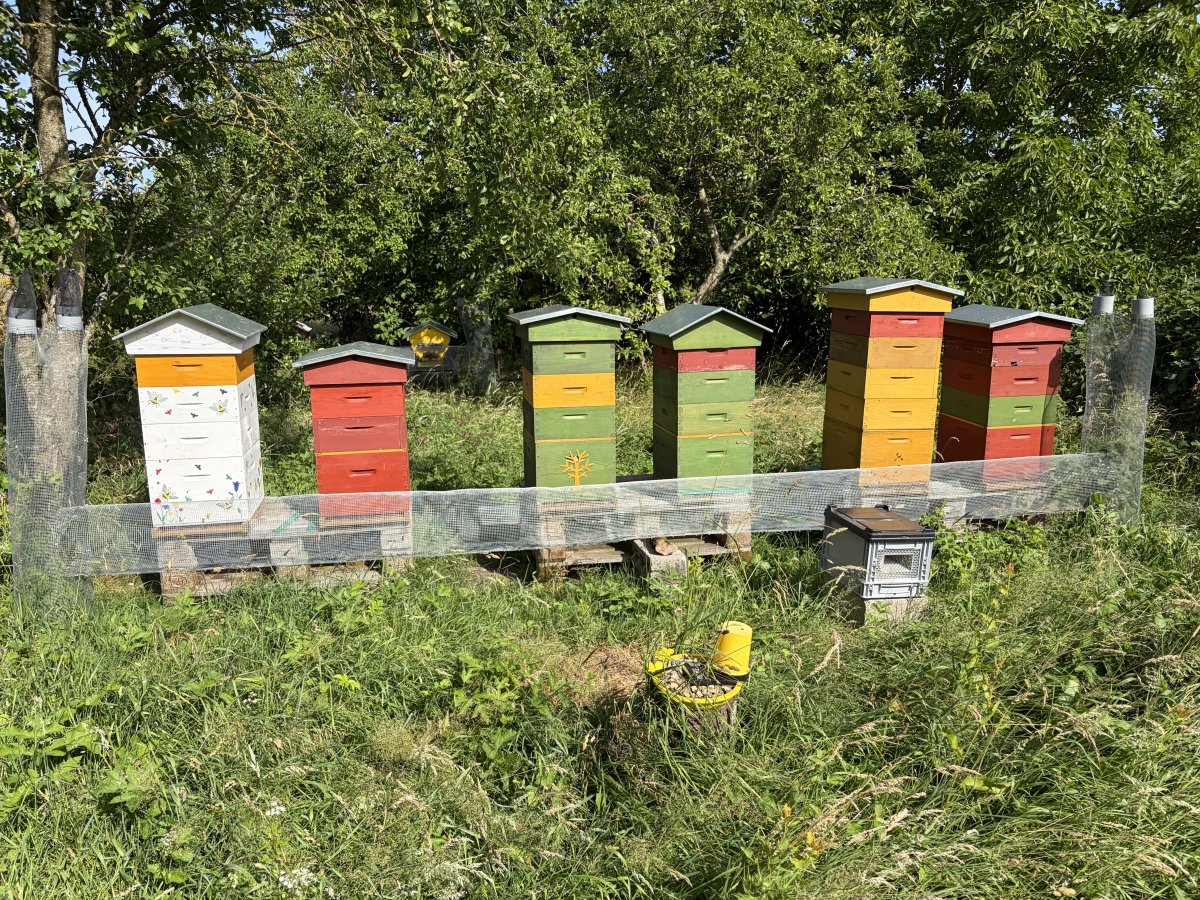
In this picture you can see how the trap is placed in front of the entry of the hives. There are a number of openings in the horizontal tunnel, the Asian hornets enter these openings and then always have the tendency to hover a bit upwards. After some time they get in one of the side chimneys, where they further move upwards and they get stuck in one of the 4 socks.
Great is that the hives are not only protected, but you also catch the Asian hornets.
Bees that get stuck can easily get out of the trap.
The Koldo Belasko trap is highly selective to the Asian Hornets. In below video you see how the Asian Hornets finally get stuck in the upper socks of the trap.
Other Bee hive protections / traps
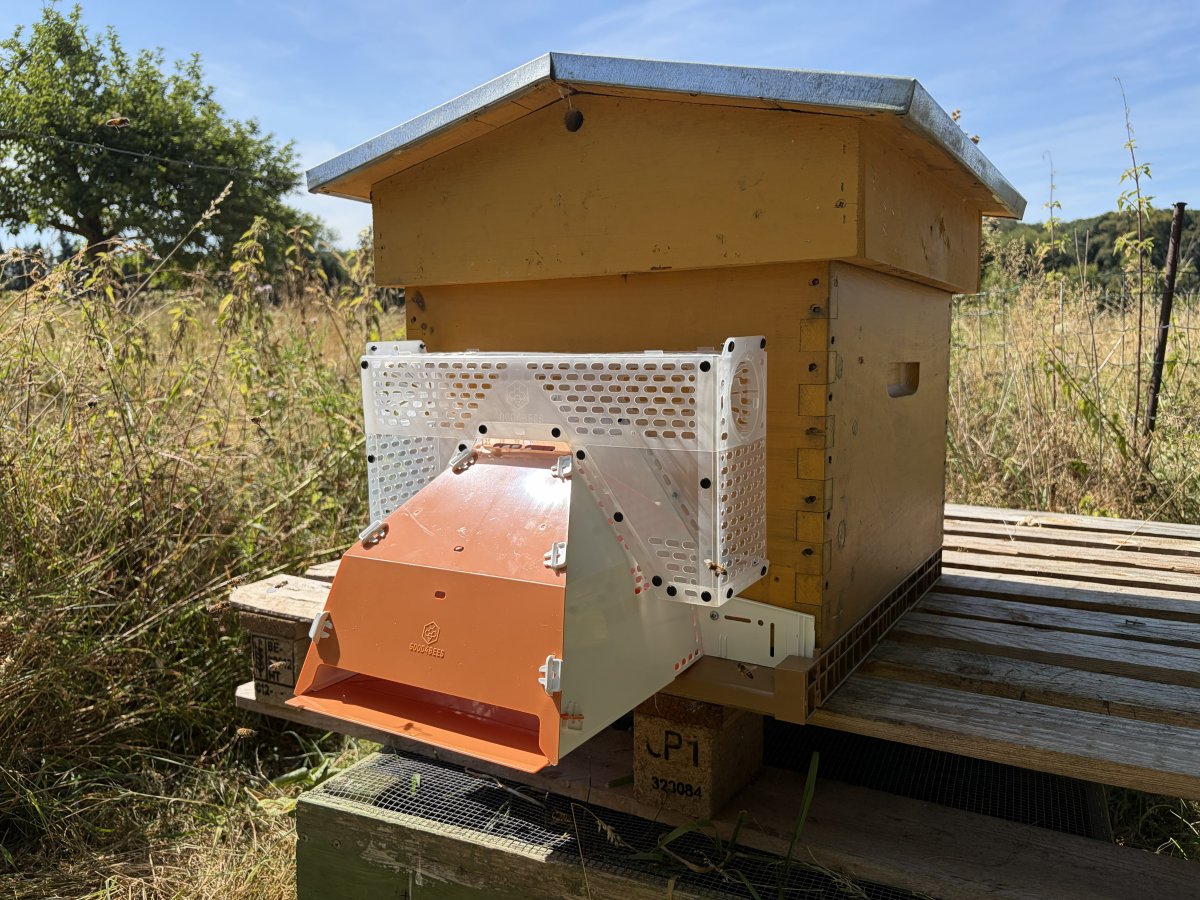
You can also use other types of protections. I'm currently testing one from Good4Bees on a single bee hive.